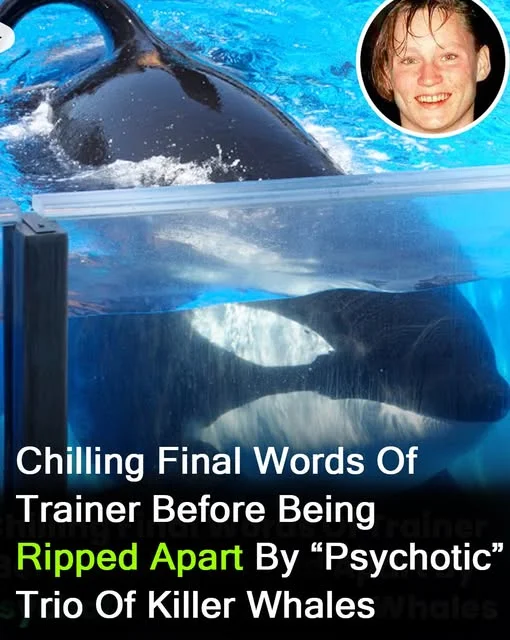
In a shocking turn of events that has captured global attention, a viral video from Blue Ocean Park shows an orca’s sudden and violent outburst during what was meant to be a routine performance. The packed stadium was filled with cheers moments before the incident, but that excitement was replaced by horror in an instant. Viewers across social media have been unable to look away from the disturbing footage, where the killer whale, normally a symbol of grace and intelligence, became the center of a real-life tragedy. Without warning, the audience was confronted with the chilling sound of cold water splashing, followed by a wave of panic that spread like wildfire through the crowd. What had started as a family-friendly show turned into a nightmare that no one present will ever forget.

Witnesses describe an atmosphere that shifted from delight to disbelief in a matter of seconds. Children sat frozen in their seats while parents instinctively pulled them closer, unable to process what was unfolding before their eyes. The orca, which had been performing synchronized jumps and playful spins only moments earlier, suddenly lunged toward the platform where trainer Jessica Radcliffe stood. Gasps and screams filled the air as the massive animal’s movement broke the surface with a force that could be felt even from the upper rows of the stadium. For a split second, silence fell, as if everyone was holding their breath. Then, chaos erupted. The horrifying moment was immortalized on countless phones, the shaky camera angles doing nothing to soften the brutality of what came next.
Jessica Radcliffe, a seasoned marine trainer with over a decade of experience, had been admired for her bond with the orcas at Blue Ocean Park. She was known for her calm demeanor and skillful handling of the park’s most famous animals. On that day, she had been smiling and waving at the crowd moments before the attack. The viral video shows her attempting to regain control, using familiar hand signals in a desperate attempt to calm the agitated orca. But the animal’s behavior was beyond the usual signs of stress or playfulness that trainers are trained to recognize. The audience watched in helpless shock as the situation escalated, with every passing second making it clear that something was terribly wrong. The orca’s massive tail slapped the water with such force that the sound echoed off the stadium walls.

The moment that left viewers speechless came when the water turned red. The vivid color spread across the pool in swirling patterns, a stark contrast against the turquoise blue that moments earlier had been sparkling under the stadium lights. Screams from the stands grew louder, blending with the shouts of other trainers rushing to the scene. The video, now seen millions of times online, freezes in many people’s minds at that instant—the moment when entertainment transformed into real danger. Security staff and emergency medical personnel moved quickly, yet the scale and suddenness of the incident made any intervention feel painfully slow. Every second mattered, and yet the scene felt like it was playing out in slow motion for those who were there.
Experts in marine mammal behavior have since weighed in, offering theories on why the orca might have reacted so violently. Some point to stress from captivity, noting that orcas in confined spaces can develop unpredictable and sometimes aggressive tendencies. Others highlight that even the most well-trained animals retain their wild instincts, which can surface without warning. The debate has intensified around the ethics of keeping such powerful, intelligent creatures in entertainment facilities, with animal welfare advocates renewing calls for reform. Blue Ocean Park has released a brief statement expressing sorrow for the incident and pledging to conduct a full investigation, though the park has declined to release further details until more is known. The story has reignited global conversations about the cost of animal performances to both humans and the animals themselves.

In the days following the tragedy, memorials have sprung up outside the park gates, with flowers, handwritten notes, and photographs of Jessica placed alongside stuffed toy orcas left by grieving visitors. Social media remains flooded with tributes to the trainer, along with heated debates over marine park practices. The viral video continues to circulate, serving as both a grim reminder of the risks involved in human-animal interactions and a rallying point for those demanding change. While investigations proceed and the public waits for answers, the haunting images from Blue Ocean Park will not soon fade from memory. For those who were there, the sound of the cold water, the sudden terror, and the sight of the water turning red will forever mark the day when a show meant to inspire awe instead delivered heartbreak.
Her legacy lives on as a reminder of the need for reform and deeper respect for the natural world.
********************************************************************************
Young woman dies at the hands of her… See more

Jennifer Robyn Bernard, an actress who was one of the early stars of General Hospital, died this week.The role of Terry Brock on General Hospital for about six years in the 1980s was played by Robyn when she died.TMZ says she was found in San Jacinto, California.Tuesday, police were called to look into a death, and Robyn’s fingerprints were used to identify her.The cause of death has not been released, and an autopsy will be done by the Riverside County Coroner on Wednesday.
IMDB says the soap opera actress was in 145 episodes of General Hospital from 1984 to 1990.
In Voices from the High School, which aired in 2002, she played a psychologist.
passing of our beloved Jackie Zeman,†the touching post continued.


“Just like her character, the legendary Bobbie Spencer, she was a bright light and true professional that brought so much positive energy with her to work.â€
“We will miss Jackie a lot, but her good mood will live on in our cast and crew forever.â€
She had a lot of friends and family, especially her daughters Cassidy and Lacey. We are very sorry for her loss. “GHâ€
People on the show and her co-stars have also said nice things about the late actress.
Rick Springfield, an Australian actor and musician who played Dr. Noah Drake, told People that he was “incredibly shocked and broken-hearted†to hear about Jackie’s death.
She had a lot of friends and family, especially her daughters Cassidy and Lacey. We are very sorry for her loss. “GHâ€
People on the show and her co-stars have also said nice things about the late actress. Rick Springfield, an Australian actor and musician who played Dr. Noah Drake, told People that he was “incredibly shocked and broken-hearted†to hear about Jackie’s death.
*****************************************************************************
THE REVENGE OF THE KILLER WHALE THAT KILLED 3: Chilling Photo Reveals Captive Orca’s Hatred Toward Trainers
In a haunting image captured at
SeaWorld in Orlando, Florida, Tilikum, a male orca, glares at his trainers with an intensity that chills the soul. This is not just a photograph—it’s a window into the life of a majestic creature trapped in a world far removed from the vast oceans he was born to roam. Tilikum’s story, marked by captivity, tragedy, and controversy, raises profound questions about the ethics of keeping orcas in captivity. His life, explored in the 2013 documentary Blackfish, serves as a powerful reminder of the cost of entertainment and the complex emotional lives of these intelligent beings.
Tilikum’s Early Life and Capture
Born around December 1981 off the coast of Iceland, Tilikum’s life began in the wild, where orcas thrive in tight-knit family pods, hunting and communicating across vast distances. But in November 1983, at just two years old, his freedom was stolen. Tilikum was captured using nets in Berufjörður, eastern Iceland, and taken to Hafnarfjördur Marine Zoo. After nearly a year in a holding tank, he was transferred to Sealand of the Pacific in Victoria, Canada, where he shared a cramped space with two older female orcas, Haida II and Nootka IV. Both were pregnant and treated Tilikum with aggression, leaving him physically and emotionally scarred in an environment far from the open sea.
Life in Captivity
In 1992, Tilikum was moved to SeaWorld in Orlando, Florida, where he would spend the rest of his life. At SeaWorld, he performed for cheering crowds, but behind the spectacle was a life of confinement. Orcas in the wild swim up to 100 miles a day, but Tilikum was confined to a tank that, to him, was little more than a bathtub. The 2013 documentary Blackfish revealed how such conditions take a toll on orcas’ mental health, leading to abnormal behaviors like aggression and depression. Tilikum’s massive size—22 feet long and weighing 12,000 pounds—made his confinement even more unbearable, as he had little room to move or express his natural instincts.
The Tragedies Linked to Tilikum
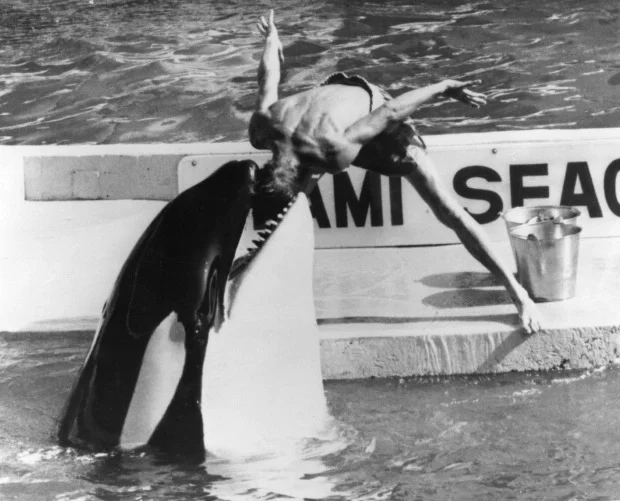
While orca attacks on humans are virtually unheard of in the wild, captivity changes the equation. Tilikum was linked to three human deaths, each a stark reminder of the dangers of keeping these wild animals in artificial environments. In 1991, at Sealand of the Pacific, trainer Keltie Byrne slipped into the tank and was drowned by Tilikum and the other orcas. In 1999, Daniel P. Dukes, a man who illegally entered SeaWorld after hours, was found dead in Tilikum’s tank. And in 2010, the most high-profile incident occurred when Tilikum pulled experienced trainer Dawn Brancheau into the water during a performance, leading to her tragic death. These incidents, detailed in Blackfish, sparked global outrage and fueled debates about the ethics of orca captivity.
Death of Tilikum merchandise
 SeaWorld Orlando merchandise
The Impact of Blackfish
The release of Blackfish in 2013 was a turning point. The documentary exposed the harsh realities of orca captivity, from shortened lifespans to psychological trauma. It argued that orcas like Tilikum, deprived of their natural environment and social structures, become prone to unpredictable and aggressive behavior. The film’s impact was seismic: SeaWorld’s attendance plummeted, and public pressure led the company to end its orca breeding program in 2016. Tilikum’s story became a symbol of the broader fight to end the captivity of marine mammals, inspiring activists and lawmakers to push for change
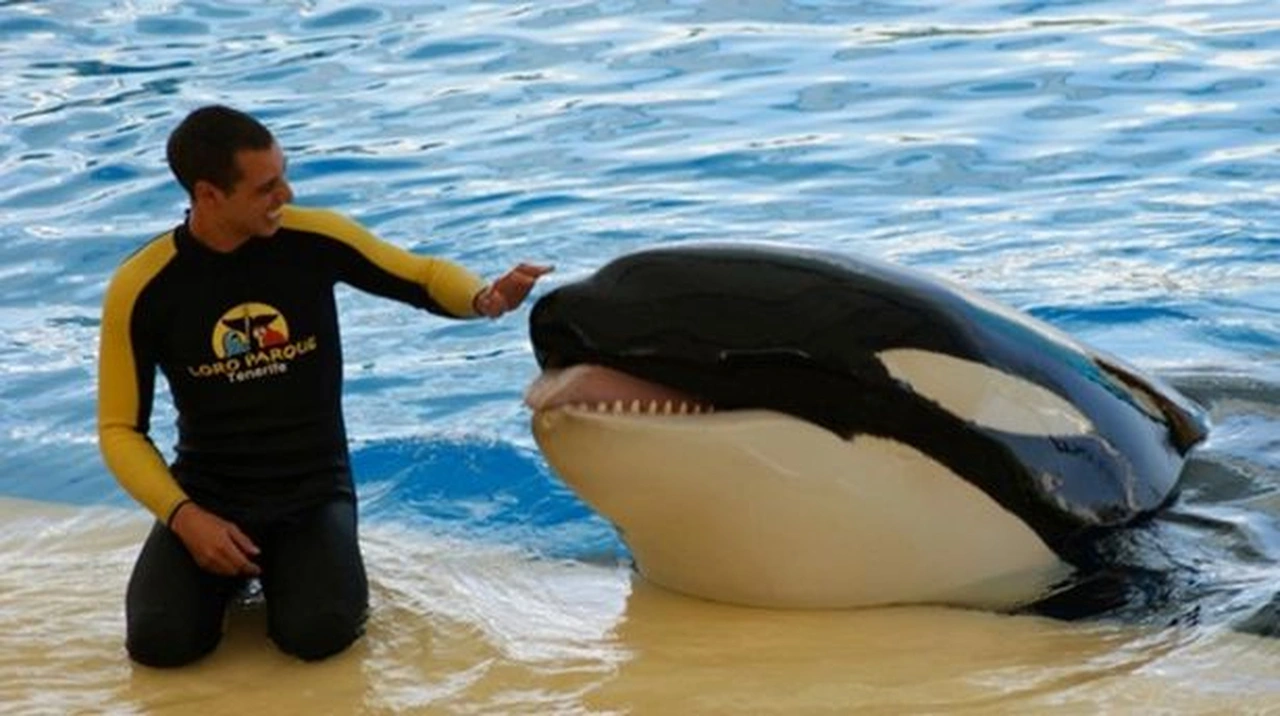
Tilikum’s health deteriorated in his final years. In January 2017, he succumbed to a bacterial infection at the age of 35—a far cry from the 50–80 years orcas can live in the wild. His death marked the end of a life defined by loss: loss of freedom, family, and, ultimately, his own well-being. Yet even in death, Tilikum’s legacy endures, challenging us to rethink how we treat the creatures we share this planet with.
Tilikum’s piercing gaze in that
SeaWorld photograph is more than a moment frozen in time—it’s a plea for understanding. His life, marred by captivity and tragedy, forces us to confront uncomfortable truths about the cost of human entertainment. Through Blackfish and the global movement it sparked, Tilikum’s story has become a catalyst for change, urging us to prioritize the welfare of animals over profit. As we reflect on his legacy, let us honor Tilikum by advocating for a world where orcas swim free in the oceans they were born to call home.
*****************************************************************

.
This year the Lord grants us, once again, a favourable time to prepare to celebrate with renewed hearts the great mystery of the death and resurrection of Jesus, the cornerstone of our personal and communal Christian life. We must continually return to this mystery in mind and heart, for it will continue to grow within us in the measure that we are open to its spiritual power and respond with freedom and generosity.
Christian joy flows from listening to, and accepting, the Good News of the death and resurrection of Jesus. This kerygma sums up the mystery of a love “so real, so true, so concrete, that it invites us to a relationship of openness and fruitful dialogue†(Christus Vivit, 117). Whoever believes this message rejects the lie that our life is ours to do with as we will. Rather, life is born of the love of God our Father, from his desire to grant us life in abundance (cf. Jn 10:10). If we listen instead to the tempting voice of the “father of lies†(Jn 8:44), we risk sinking into the abyss of absurdity, and experiencing hell here on earth, as all too many tragic events in the personal and collective human experience sadly bear witness.
In this Lent of 2020, I would like to share with every Christian what I wrote to young people in the Apostolic Exhortation Christus Vivit: “Keep your eyes fixed on the outstretched arms of Christ crucified, let yourself be saved over and over again. And when you go to confess your sins, believe firmly in his mercy which frees you of your guilt. Contemplate his blood poured out with such great love, and let yourself be cleansed by it. In this way, you can be reborn ever anew†(No. 123). Jesus’ Pasch is not a past event; rather, through the power of the Holy Spirit it is ever present, enabling us to see and touch with faith the flesh of Christ in those who suffer.
It is good to contemplate more deeply the paschal mystery through which God’s mercy has been bestowed upon us. Indeed, the experience of mercy is only possible in a “face to face†relationship with the crucified and risen Lord “who loved me and gave himself for me†(Gal 2:20), in a heartfelt dialogue between friends. That is why prayer is so important in Lent. Even more than a duty, prayer is an expression of our need to respond to God’s love which always precedes and sustains us. Christians pray in the knowledge that, although unworthy, we are still loved. Prayer can take any number of different forms, but what truly matters in God’s eyes is that it penetrates deep within us and chips away at our hardness of heart, in order to convert us ever more fully to God and to his will.
In this favourable season, then, may we allow ourselves to be led like Israel into the desert (cf. Hos 2:14), so that we can at last hear our Spouse’s voice and allow it to resound ever more deeply within us. The more fully we are engaged with his word, the more we will experience the mercy he freely gives us. May we not let this time of grace pass in vain, in the foolish illusion that we can control the times and means of our conversion to him.
3. God’s passionate will to dialogue with his children
The fact that the Lord once again offers us a favourable time for our conversion should never be taken for granted. This new opportunity ought to awaken in us a sense of gratitude and stir us from our sloth. Despite the sometimes tragic presence of evil in our lives, and in the life of the Church and the world, this opportunity to change our course expresses God’s unwavering will not to interrupt his dialogue of salvation with us. In the crucified Jesus, who knew no sin, yet for our sake was made to be sin (cf. 2 Cor 5:21), this saving will led the Father to burden his Son with the weight of our sins, thus, in the expression of Pope Benedict XVI, “turning of God against himself†(Deus Caritas Est, 12). For God also loves his enemies (cf. Mt 5:43-48).
The dialogue that God wishes to establish with each of us through the paschal mystery of his Son has nothing to do with empty chatter, like that attributed to the ancient inhabitants of Athens, who “spent their time in nothing except telling or hearing something new†(Acts 17:21). Such chatter, determined by an empty and superficial curiosity, characterizes worldliness in every age; in our own day, it can also result in improper use of the media.
4. A richness to be shared, not kept for oneself
Putting the paschal mystery at the centre of our lives means feeling compassion towards the wounds of the crucified Christ present in the many innocent victims of wars, in attacks on life, from that of the unborn to that of the elderly, and various forms of violence. They are likewise present in environmental disasters, the unequal distribution of the earth’s goods, human trafficking in all its forms, and the unbridled thirst for profit, which is a form of idolatry.
Today too, there is a need to appeal to men and women of good will to share, by almsgiving, their goods with those most in need, as a means of personally participating in the building of a better world. Charitable giving makes us more human, whereas hoarding risks making us less human, imprisoned by our own selfishness. We can and must go even further, and consider the structural aspects of our economic life. For this reason, in the midst of Lent this year, from 26 to 28 March, I have convened a meeting in Assisi with young economists, entrepreneurs and change-makers, with the aim of shaping a more just and inclusive economy. As the Church’s magisterium has often repeated, political life represents an eminent form of charity (cf. Pius XI, Address to the Italian Federation of Catholic University Students, 18 December 1927). The same holds true for economic life, which can be approached in the same evangelical spirit, the spirit of the Beatitudes.
I ask Mary Most Holy to pray that our Lenten celebration will open our hearts to hear God’s call to be reconciled to himself, to fix our gaze on the paschal mystery, and to be converted to an open and sincere dialogue with him. In this way, we will become what Christ asks his disciples to be: the salt of the earth and the light of the world (cf. Mt 5:13-14).